
Dental Bridges
Dental bridges are used to replace missing teeth by bridging the gap between two healthy teeth. They consist of one or more artificial teeth that fill the gap created by the missing tooth or teeth and are held in place by dental crowns on either side of the gap. The crowns are securely anchored to the adjacent healthy teeth or dental implants, ensuring stability and functionality.
Dental bridges offer an excellent solution for patients with missing teeth, providing numerous benefits such as restored oral function, improved aesthetics, and long-term stability.
If you believe a dental bridge might be the right choice for you, schedule a consultation with Dr. Souliman to discuss your options.


Reasons for Needing a Dental Bridge:
Tooth loss due to decay.
Traumatic tooth injury.
Gum disease.
Congenital absence of a tooth.
Unsuccessful root canal treatment.
Aesthetic purposes.
Before and After Images of Actual Patients


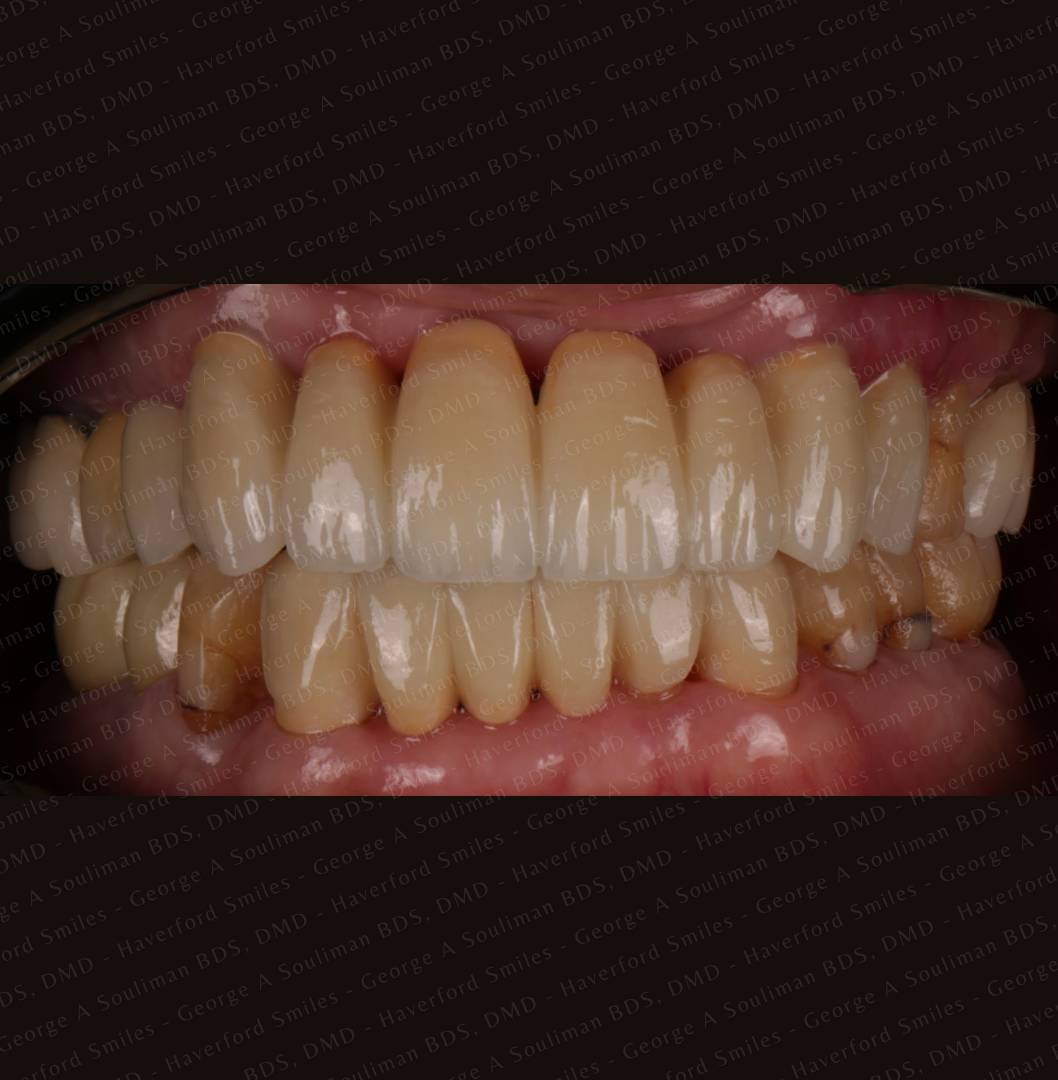


Anterior Mouth Rehab - Upper and Lower Bridgework
This patient started with severely worn, discolored, and damaged front teeth that affected both their smile and ability to chew comfortably. After complete upper and lower bridgework, they now have a brighter, stronger, and natural-looking smile that restores confidence and function.


Cosmetic Ceramic Bridge
A ceramic bridge replaces one or more missing teeth by anchoring to adjacent natural teeth. It restores chewing function, maintains facial structure, and creates a seamless, natural-looking smile.
What does getting a dental bridge involve?
During the initial consultation, the dentist conducts a comprehensive examination of your oral health, discusses your dental history, and determines if a dental bridge is the appropriate solution.
If the adjacent teeth that will support the bridge have any decay or damage, they are prepared by removing a small portion of their enamel to make space for the crowns. Precise digital impressions of your teeth are taken to create a dental bridge that fits perfectly in your mouth. While the permanent bridge is being created in a dental lab, a temporary bridge may be provided to protect the exposed teeth and gums. Once the permanent bridge is ready, Dr. Souliman checks its fit and makes any necessary adjustments to ensure a comfortable and proper bite.
The dental bridge is then bonded into place using dental cement. Proper oral hygiene practices, including regular brushing, flossing, and dental check-ups, are essential for the aftercare and maintenance of your dental bridge to help ensure its functionality.